Understanding What Normal Working Order Actually Means
There is a phrase that gets tossed around in real estate every single day when someone wants to downplay a defect. It sounds simple. “Well, it works.” The furnace comes on. The sink drains. The water heater makes hot water. The lights turn on. The argument is that basic operation equals acceptability. This is one of the biggest misunderstandings in real estate. It causes unsafe conditions to be ignored and major defects to be brushed aside.
Paragraph 16B of the Arkansas Residential Real Estate Contract settles this. Normal working order means the item functions for the purpose for which it is intended. That wording matters. Intended purpose is not the same as basic function. Intended purpose includes safe operation, correct installation, required components, and proper performance of the system as a whole.
Why Basic Operation Is Not the Standard
The contract does not say normal working order means the item turns on. It does not say normal working order means water moves or heat blows. Intended purpose means the system must operate as designed. That includes the complete set of safety functions.
Inspectors do not judge systems by surface function because basic activation is the least reliable indicator of system health. Systems can operate while failing in ways that are dangerous, hidden, or catastrophic.
Real Example: Furnace With No Vent
A recent inspection shows exactly why basic function is not enough. The furnace had no gas flue vent installed at all. It sat in an interior closet. Not one inch of vent pipe was connected to the draft hood. That means all combustion byproducts were being released into the home.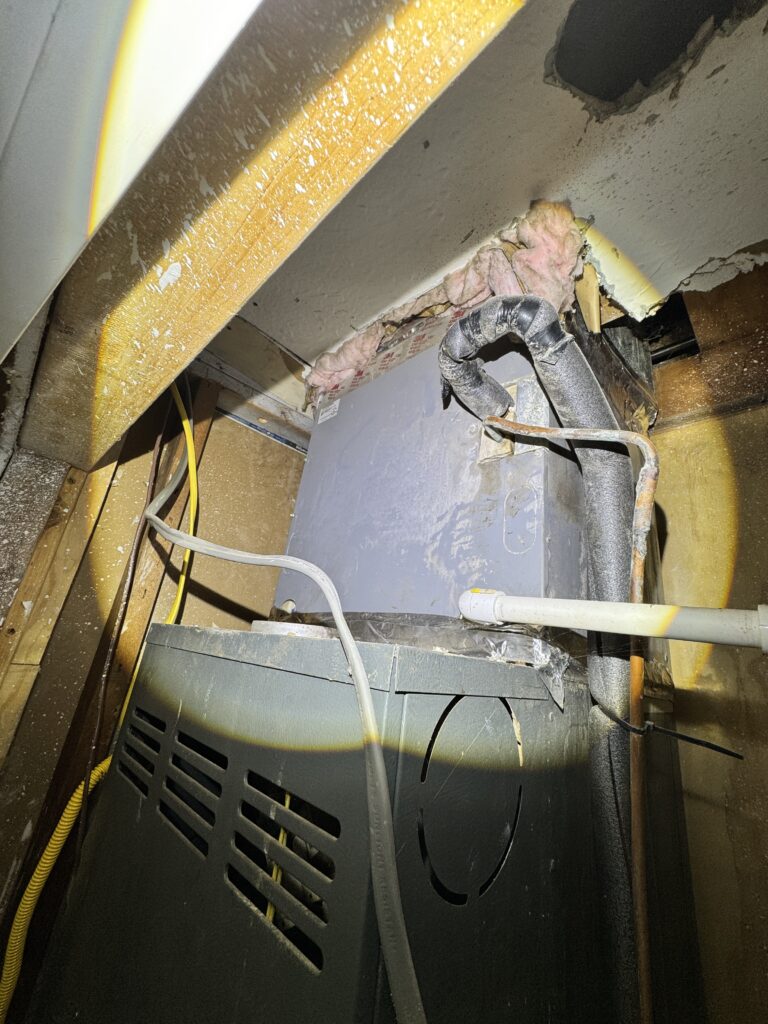
Yes, the furnace would likely produce heat. Basic function present. But the intended purpose of a furnace is safe heat. Proper combustion. Proper drafting. Proper exterior venting. Without a vent, the furnace cannot perform its intended purpose and is a life safety hazard. It is not in normal working order even if it technically comes on.
Plumbing Example: Sinks That Drain Without a Trap
Another common misunderstanding involves plumbing traps. A sink without a P trap will still drain water. People often say “it drains just fine.” But the trap does more than let water move. Its intended purpose includes blocking sewer gases from entering the structure. Without it, harmful gases can enter the home. The system does not perform its intended purpose.
Electrical Example: Undersized Conductors
Electrical systems often appear to be working while being dangerously wrong. A breaker feeding an undersized conductor will deliver power. Lights will turn on. Outlets will function. But the wire can overheat before the breaker trips.
The purpose of an electrical circuit is not only to carry electricity. The intended purpose is to carry electricity safely within the allowed ampacity. If the safety part is missing, the circuit is not performing its intended purpose.
Water Heater Example: Missing TPR Discharge Pipe
A water heater without a TPR discharge pipe will heat water. But it will not safely relieve pressure. If the valve opens, scalding water can spray across the room.
The intended purpose of the TPR valve includes safe discharge. Without the discharge line, the system is incomplete and unsafe.
Garage Door Example: No Safety Sensors
A garage door opener without functional photo sensors will still move the door up and down. Basic operation exists. But the intended purpose includes reversing when an obstruction is present. Without that function, the system is unsafe and not performing its intended purpose.
What This Means for Buyers and Sellers
When you buy or sell a home, you are dealing with complete systems. Each system is made of multiple components that all serve specific purposes. A furnace is not just a box that blows warm air. A sink is not just a bowl that drains water. A water heater is not just a hot tank.
The contract expects systems to function for their intended purpose. That includes correct components, proper safety mechanisms, proper installation, and proper operation.
Normal working order does not require anything to be new. It does not require perfection. It does not require upgrades. But it does require safe and proper function.
The Bottom Line
If basic function were the standard, then a furnace dumping carbon monoxide into a closet would pass. Everyone knows that is unacceptable. The standard is intended purpose.
Buyers deserve systems that work safely. Sellers should understand the legal definition. Inspectors must report defects based on intended purpose, not surface function.
Normal working order is not about whether it turns on. It is about whether it is safe. It is about whether it is complete. It is about whether it performs the purpose it was designed to perform.